Why Hydroponics Will Not Maximize Crop Yields
Hydroponics came into public view way back in 1929 when a University of Berkley professor Dr. William F Gericke was photographed on a ladder picking tomatoes from a 25-foot plant growing out of a washtub.
It was Dr. Gericke who coined the term “hydroponics” which translated from two Greek words means “water working”. Gericke's “Complete Guide to Soilless Gardening”, published in 1941, showed Dr. Gericke standing in front of a hydroponic system that produced 1224 lbs. of tomatoes in 130 square feet.
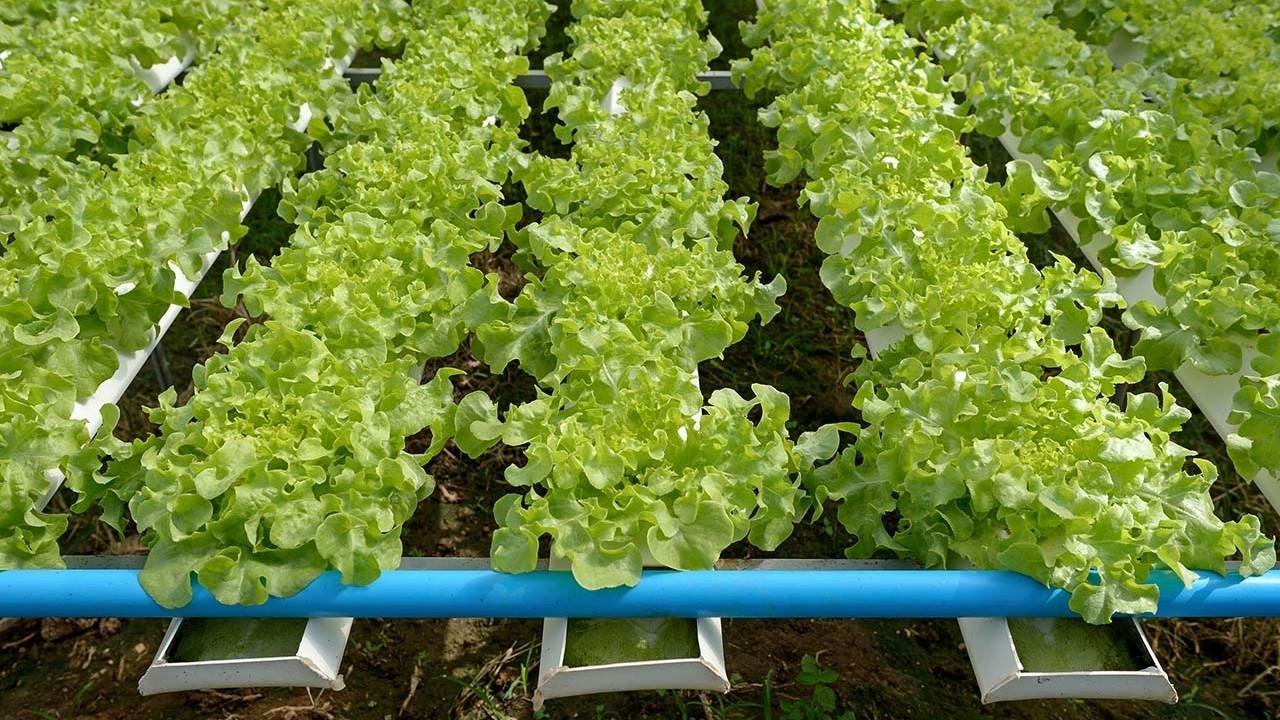
Since the 1940's there has been tremendous advances and developments in hydroponic plant culture. In the decades that have followed with the development of new materials and new technology geared toward the advancement of hydroponic plant culture. There are literally hundreds of different systems to grow plants and deliver nutrients to the plants roots.
Hydroponics can be defined as the science of growing plants without soil, although inert medias are often used in the hydroponic culture.
The advantages of hydroponic plant culture that have been touted are many and are the reason that various forms of hydroponic culture dominate controlled environment plant culture.
It is the primary form of plant culture in Greenhouse vegetable and commercial flower culture. Hydroponics is also the dominant form of plant culture used in controlled indoor facilities.
Here are some of the advantages of hydroponics:
- improved and precise plant nutrition resulting in higher plant yields
- The elimination of soil-borne diseases
- The ability to increase planting density resulting in higher yields
- Improved sanitation practices and thus reducing disease pressure on the plants
- The flexibility of systems design and setups to suit specific crop needs and ability to adapt hydroponic systems to a variety of facilities.
- The ability to utilize a variety of sterile media or to use no media at all (as is the case in aeroponics and NFT systems)
- There are no weeds to pull
- The ability to automate irrigation
- Reduce labor
- Improve plant water and nutrient uptake
- Provides an ability to coordinate feeding schedules with controlled environmental conditions.
So with all these positive attributes about hydroponic plant culture what is the downside and why would anyone want to make their horticultural world more complicated?
I have seen hundreds of millions of plants grown in hydroponic systems...so there is no question you can grow crops using this methodology. However, nature is infinitely more complex than the reductionist approach to agriculture used by Hydroponics.
In the first place, while good facility hygiene is important to control diseases, the hospital like sterile environments, which many hydroponic facilities strive for only opens the doors to diseases and pathogens. Many of the various fungal root diseases are present in our air, water, and general environment and are almost impossible to totally eliminate.
The only way to control fungal pathogens is to provide an environment where beneficial microorganisms are present which will out-compete the fungal root pathogens.
Most of these beneficial microorganisms do not survive well in an aqueous high salt environment (which is the world of hydroponics). Thus the opportunity of providing a plant protective barrier through microbiological means is minimized with the use of water-soluble mineral salt fertilizers.
Only in recent years have we become aware of the importance of beneficial microorganisms and their role and function in the root zone of the plants.
Some of the many benefits of beneficial microorganisms as follows:
- They help regulate a stable pH at the root zone
- Microorganisms manufacture a whole range of antibiotics and plant growth substances that improve plant health and increases the rate of plant growth
- Increases the rate of photosynthesis and the manufacture of plant growth hormones
- Beneficial microbiology increases the rate of water and nutrient uptake and when used in conjunction with foliar feeding can increase nutrient uptake by the plant tissues by 300 percent
- Chelates micronutrients which increase these vital minerals bio availability
- Strengthens plants immune systems and make them more resistant to insect infestation.
In side-by-side trials we ran growing peppers, tomatoes and cucumbers, the hydroponic rows were all infested with mites and aphids. Four feet away in the biological systems the plants were not infected at all....the bugs much preferred to attack the hydroponically grown plants.
Beyond the importance of microbiology in plant development, the entire hydroponic approach to plant culture is premised on several statements.
- Firstly, plants can only absorb mineral elements in very limited combinations and only when these mineral combinations are dissolved in water.
- Secondly, plants are unable to differentiate a mineral combinations source whether it came from a dissolved rock, decayed plant or animal or a dissolved fertilizer salt. Therefore hydroponic theorists assert: “There is no physiological difference between plants grown hydroponically and those grown in soil.” - (Resh, Hydroponic Food Production pg. 39)
Hydroponic plant culture stands or falls on the previous two statements. However, we have proven conclusively in the laboratory and in the field that plants absorb far more than the 13 macro and micronutrients provided by hydroponic nutrient formulas.
Not only do plants take up a whole array of mineral elements, plants can and do absorb whole organics substances and incorporate these organic compounds molecularly unchanged into their tissues.
Plants will take up vitamins, humic and fulvic acids, amino acids and a whole array of compounds which plants will use as the building blocks for plants tissues, manufacturing plant growth hormones, development of plant resins and oils.
Moreover, plants utilize these absorbed organic compounds in their metabolism which enhances the function of every cell in the plant. So significant are the physiological differences of plants grown hydroponically vs plants grown biologically the casual observer can see the difference in the crops standing 15 meters away from the plants.
The amino acid structure of the leaves and flowers are very different in biologically grown plants vs. plants grown hydroponically.
It is impossible to maximize a plants genetic potential with a mineral salt hydroponic fertilizer program no matter how well that program is managed. The outcomes of growing biologically vs hydroponically are apparent to even that casual observer. Hydroponically grown tomatoes have no tomato aroma and they have no taste. Tomatoes grown organically even in a backyard garden have both taste and aromas.
The public customer is becoming acutely aware of these differences. I used to sell my certified organic greenhouse produce at three different farmers markets and I was always amazed at consumer awareness and their resistance to buying hydroponically grown produce.
The farmers market patrons first question was most often “this isn't hydroponic produce is it?” The consumer is not convinced by all the marketing hype. There is no debate about the clear difference between hydroponically grown produce and biologically grown produce.
The cannabis industry is also noticing in remarkable differences in biologically grown crops vs. hydroponically grown crops. Laboratory evaluations of Cannabis crops are bearing out these differences.
For most small and medium-sized farming operations it is the quality produce of the produce that makes them stand out and brings in the tops dollar that pays the bills. Only growing biologically can a grower produce high-quality disease-resistant produce.
In order for hydroponics to produce high volume crops, feeding and environmental perimeters must be maintained within a very narrow range. Outside of those ranges crops fail or underperform. There is very little or no forgiveness in hydroponic systems. Once things go wrong the crop usually heads south very quickly.
With biological plant culture the range of forgiveness in the systems widens considerably with a greater chance of turning crops around that run into cultural problems.
Along with greater resilience, biologically cultured plants, as noted previously, are hardier, and more resistant to diseases and pest infestations.
This is because biological plant culture produces higher brix plants. Brix is a reading of a plant's total sugars, proteins and mineral content.
These stronger, denser plant tissues not only make for more valuable crops, they resist disease, can handle greater environment variables, and the higher sugar content discourages leaf sucking pests.
So what is biological plant culture?
- Biological plant culture runs along a continuum ranging from fully certified organic plant culture to systems that while not certifiably organic incorporate several important features.
- They are using a plant media that is friendly to beneficial microbiologicals. Not all medias are the same and many growers fail because they went “cheap” on the media. [ In the near future I will dedicate an entire article to media. ]
- Biological farming incorporates beneficial microbiologicals and incorporates essential organic plant nutrients which provide a full spectrum of organics substances that will feed both the beneficial microbial community as well as the plants everything they need to maximize their genetic potential.
- Biological plant culture can be implemented with a great amount of flexibility and has worked compatibly with many of the hydroponic systems used commercially.
I have worked with many former hydroponic growers, who once understanding the principles of biological plant culture, were convinced but wanted to know, "can I utilize my hydroponic systems biologically?" The answer in most cases is yes.
Most growers have invested a great deal of money into their systems and operations and cannot afford to gut their capital investments. Usually, with some tweaking, we have been able to see hydroponic growers be even more successful biological growers.
So what are the downsides to biological farming?
- First, organic plant inputs are more expensive than mineral salt fertilizers....usually somewhere between 20 to 30 percent more expensive.
This is truly a case where you get what you pay for and the rewards far outweigh the expenses. Nutrients usually involve a small percentage of any operations overhead and a 20 to 30 percent increase is long forgotten once the higher priced end product goes to market.
- Secondly, there is more involved in biological plant culture. Unlike mineral salt hydroponics nutrients you cannot just mix and feed immediately. Biological nutrients need to be brewed at least 6 to 8 hours. This is where the magic begins.
Usually, growers set their brew tanks last thing before they leave at night and by the time they get back in the morning things are ready to go. So once a biological grower gets into the routine it is not that much of an inconvenience.
- Thirdly, biological growers need to be more in touch with your plants. A grower needs to be able to read their plants and anticipate their responses to changes in the program, which is often the case as plants grow and mature.
Most growers have appreciated being more in touch with their crops and as a result have become better growers.
Hydroponic horticultural has birthed an agricultural revolution and given us an expanded understanding of plant science, however, hydroponic plant culture will not be able to compete with the emergence of the new biological plant culture that will take horticulture to the next level.